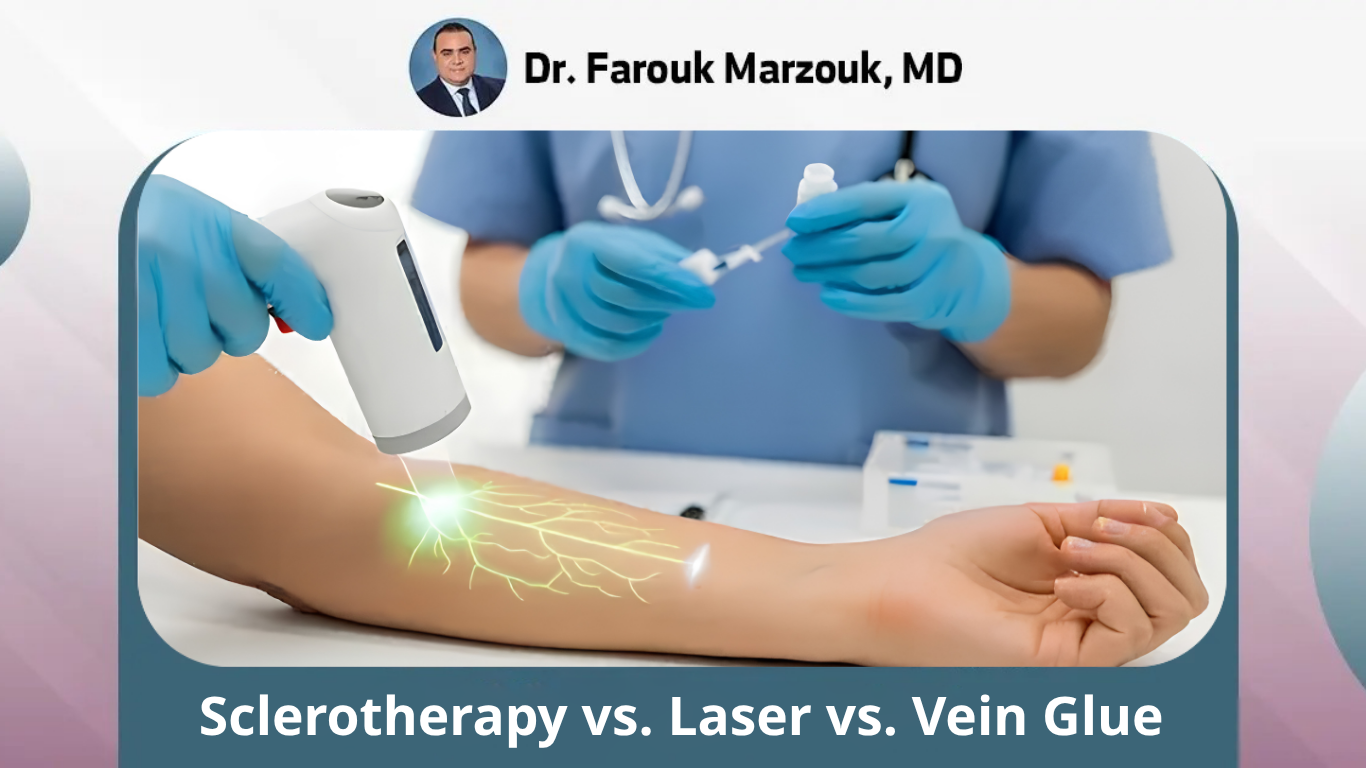
Sclerotherapy vs. Laser vs. Vein Glue is one of the most important subjects you have to know. This article provides a clear comparison of Sclerotherapy vs. Laser vs. Vein Glue, three leading treatments for varicose and spider veins. It explains how each procedure works, its effectiveness, ideal applications, recovery time, and possible side effects. Readers will learn the key differences between injection therapy, laser treatment, and medical vein glue, helping them make an informed decision with a qualified specialist based on their vein condition, treatment goals, expected results, and individual health needs.
Table of Contents
ToggleWhat Are Varicose Veins and Why Do They Appear?
Varicose veins are swollen, twisted veins that usually appear on the legs and feet, often looking like bulging, rope-like cords under the skin. They occur when the one-way valves inside your veins weaken or become damaged, allowing blood to pool instead of flowing efficiently back to the heart.
How Varicose Veins Form:-
Veins in your legs must work against gravity to return blood to your heart. Small one-way valves inside these veins normally prevent blood from flowing backward. When these valves become weak or incompetent, blood accumulates in the vein, increasing pressure and causing the vein walls to stretch, swell, and twist.
Common Symptoms of varicose veins
While some people experience no symptoms beyond the visible appearance, others may notice:
- A heavy, achy, or throbbing feeling in the legs
- Burning, itching, or muscle cramping in the lower legs
- Swelling in the feet and ankles
- Pain that worsens after sitting or standing for long periods
- Skin discoloration or dry, scaly skin around the affected area
Overview of Modern Treatment Options:-
After knowing Sclerotherapy vs. Laser vs. Vein Glue, you have to know the modern treatment options. Historically, vein stripping and ligation was the standard treatment for varicose veins. This surgical procedure involved making incisions in the leg, tying off the affected vein, and physically removing it through small cuts. While effective, this approach required general or spinal anesthesia, resulted in significant bruising and pain, and typically needed 2–4 weeks for full recovery.
Today, vein stripping is rarely performed and is generally reserved for cases where newer, less invasive treatments are unsuitable. Modern guidelines from vascular societies now recommend endovenous ablation techniques as the first-line therapy for most patients with varicose veins.
Sclerotherapy: How It Works
Sclerotherapy is a minimally invasive procedure that uses a chemical solution called a sclerosant to close off unwanted veins. It is widely considered the gold standard for treating spider veins and small-to-medium varicose veins.
How Sclerotherapy Works
During the procedure, a clinician injects a sclerosing agent (such as sodium tetradecyl sulfate or polidocanol) directly into the affected vein using a fine needle. The solution irritates the inner lining of the vein, causing it to swell, stick together, and eventually collapse.
Over the following weeks, the treated vein is gradually absorbed by the body and fades from view. Blood is naturally rerouted through healthier nearby veins, so closing the damaged vein does not harm circulation.
Laser Treatment (Endovenous Laser Ablation – EVLA)
Laser Treatment is a minimally invasive treatment for varicose veins. It uses controlled laser energy to heat and seal the affected vein, allowing blood to flow through healthier veins. Performed under local anesthesia, EVLA typically causes little discomfort, requires minimal downtime, and offers effective, long-lasting results. A qualified vein specialist can determine whether this procedure is suitable for your condition and treatment goals.
Vein Glue (Cyanoacrylate Closure / VenaSeal)
Sclerotherapy vs. Laser vs. Vein GlueVein is so clear, as Glue is a minimally invasive, non-thermal treatment used to close unhealthy veins responsible for varicose veins. During the procedure, a specially designed catheter is guided into the affected vein using ultrasound. Small amounts of medical-grade cyanoacrylate adhesive are then delivered at selected points, allowing the vein walls to stick together and close. Blood is naturally redirected through healthier veins, while the treated vein gradually becomes fibrotic and is absorbed by the body.
How the Procedure Works
Before treatment, the vein specialist usually performs a duplex ultrasound examination to identify the faulty vein, assess blood flow, and plan the treatment. The skin is cleaned, and the area where the catheter enters is numbed with local anesthesia. The catheter is then inserted through a small puncture and positioned inside the vein.
Unlike endovenous laser ablation or radiofrequency ablation, VenaSeal does not use heat to damage the vein. The specialist applies small quantities of adhesive while gently compressing the vein. Once the vein is sealed, the catheter is removed, and a small dressing is placed over the access site.
Because the procedure does not rely on thermal energy, it generally does not require tumescent anesthesia, which involves injecting a larger volume of numbing fluid around the vein. It may also reduce the need for postoperative compression stockings, although individual instructions vary by clinic and patient.
Main Benefits
VenaSeal may offer several advantages for suitable patients:
- It is performed through a small needle puncture rather than a surgical incision
- It does not use heat, reducing concerns related to thermal injury
- It generally requires only local anesthesia at the catheter entry point
- Treatment time is usually relatively short.
- Recovery may be faster than traditional surgical vein stripping
- Many patients can resume normal activities shortly after treatment, subject to their specialist’s advice
Risks and Expected Side Effects:-
Vein Glue is generally considered a safe, minimally invasive treatment when performed by a qualified vein specialist. However, like any medical procedure, it may cause temporary side effects and carries certain risks. Here are the expected Side Effects:
- Mild pain, tenderness, tightness, or discomfort along the treated vein
- Bruising, redness, or minor swelling around the catheter insertion site
- A firm or cord-like feeling along the treated vein as it closes
- Temporary itching, warmth, or skin sensitivity
- Mild inflammation known as superficial phlebitis
- Temporary numbness or tingling near the treatment area
- Minor bleeding or irritation at the puncture site
Sclerotherapy vs. Laser vs. Vein Glue:-
There are several differences between Sclerotherapy vs. Laser vs. Vein Glue. The following comparison highlights the most important distinctions between these treatment options:
| Feature | Sclerotherapy | Laser Treatment (EVLA) | Vein Glue (VenaSeal) |
| Main method | A sclerosant solution or foam is injected into the vein | Laser energy heats and seals the vein | Cyanoacrylate medical adhesive seals the vein |
| Best suited for | Spider veins, smaller varicose veins, and selected larger veins | Many patients with reflux in larger superficial veins | Selected superficial veins affected by venous reflux |
| Uses heat? | No | Yes | No |
| Ultrasound guidance | Often used for foam sclerotherapy | Used during the procedure | Used during the procedure |
| Anesthesia | Often minimal or local, depending on the vein | Usually local/tumescent anesthesia | Usually local anesthesia at the access site |
| Compression stockings | May be recommended | May be recommended | May not be routinely required, depending on the clinician |
| Recovery | Usually quick, but several sessions may be needed | Generally short recovery | Often quick recovery |
| Main concerns | Pigmentation, inflammation, recurrence, or clot-related complications | Bruising, discomfort, nerve irritation, and heat-related injury | Inflammation, adhesive sensitivity, and rare allergic reactions |
In conclusion,you’ve learned about Sclerotherapy vs. Laser vs. Vein Glue, along with the key details of each. Don’t hesitate to visit Frontier Clinic now for a personalized consultation and to receive the most suitable treatment for you.
FAQ about Sclerotherapy vs. Laser vs. Vein Glue
What’s the main difference between Sclerotherapy vs. Laser vs. Vein Glue ?
- Sclerotherapy: Injection of a solution to close the vein from inside (ideal for small/spider veins).
- Laser: Heat from laser closes larger veins.
- Vein Glue: Medical adhesive seals the vein instantly, no heat needed.
Which is best for large veins?
Laser or Glue, both highly effective, Glue is faster and less painful.
Which is best for small/spider veins?
Sclerotherapy is the first-choice and most precise option.
How many sessions are needed?
- Sclerotherapy: 2–4 sessions.
- Laser/Glue: One session for the main vein.
For more details about Sclerotherapy vs. Laser vs. Vein Glue Contact Vascular Clinic by Farouk Marzouk: Expert Care for Your Vascular Health today.